Bulgaria may be a small country, but it offers remarkable natural beauty that attracts visitors from all over the world. Rich in scenic landscapes, it provides ideal conditions for a true escape from the grey and hectic everyday life.
Nowhere else in Bulgaria will you find such a concentration of European architectural styles. Ruse is the largest Bulgarian city on the Danube River.
Many prominent European countries such as Austria-Hungary, Russia, Greece, Great Britain, Italy and Prussia, France, Belgium, the Netherlands, Romania, and Spain chose Ruse as the seat of their diplomatic missions. This is how European culture first entered the city. These consulates remained even after the Liberation, when Ruse was the largest city in the Principality of Bulgaria.
People from Ruse traveled by steamboat to Vienna and began sending their children to study there, as well as in cities like Graz and Budapest. The streets were filled with people speaking Bulgarian, German, Turkish, Armenian, Hebrew, and French. Thanks to its position on the Danube, trade flourished. The preserved architecture gives Ruse a unique atmosphere, making the city resemble those of Western Europe.
Many renowned architects worked here, shaping Ruse’s distinctive appearance. Numerous public buildings were constructed in the neoclassical style, characteristic of European cities in the second half of the 19th century. You can also see elements of Baroque, Gothic, and Renaissance architecture.
One of the most impressive buildings is the Theatre, also known as the Dohodno Zdanie (the Profit Building), opened in 1902. The architectural competition was won by the Viennese architect Raul-Paul Brang, who received a prize of 1,500 gold leva for his neoclassical design. The building features a beautiful façade and seven sculptural figures on the roof.
These figures symbolize art, science, agriculture, crafts, trade, defense, and the free flight of the spirit. At the very top stands Mercury—the symbol of trade. In the late 19th and early 20th centuries, the streets of Ruse—Aleksandrovska, Knyazheska, Pirotska, Targovska (Slavyanska), and Nikolaevska—looked spectacular, lined with elegant buildings.
Another interesting landmark is the Museum of Urban Life, also known as Kaliopa House. In 1889, the municipality imported granite cobblestones from the San Rafael quarry near the French city of Marseille. The local “Trud” factory began producing ceramic cobblestones and pavement tiles—giving the city’s streets and sidewalks their impressive look.
The first administrative building in Bulgaria after the Liberation was the Regional Administration in Ruse (now the Historical Museum), built in 1882 by Viennese architect Friedrich Grünanger. The Knyaz Boris Boys’ High School (today Hristo Botev School) and the building of the Chamber of Commerce and Industry are also noteworthy. The latter now houses the Regional Library “Lyuben Karavelov.”
On Aleksandar Batenberg Square stands the former Simeonovi Brothers Bank, later the Ruse Popular Bank (now DSK Bank). The old Music School on Borisova Street is the only Gothic-style building in the city.
The Orthodox church “All Saints,” designed by Eduard Winter, was demolished in 1975 to make room for the Pantheon of the National Revival Heroes. The Catholic church “St. Paul of the Cross,” built by Polish officers, houses the first church organ in Bulgaria. Also remarkable is the City Garden, home to the Monument of Freedom, crafted by the Italian sculptor Arnoldo Zocchi. This monument has become a symbol of Ruse and is featured on the city’s coat of arms.
There are many beautiful buildings in Ruse—so many that listing them all is nearly impossible. Some of the notable ones include: the Burov Bank, the buildings of the “Bulgaria” Insurance Company, the “Girdap” Bank, Hotel “Teteven,” Stefan Gadev’s Brewery, and the Catholic boarding school Notre Dame de Sion (today’s English Language High School). All this gives the citizens of Ruse every right to call their city “Little Vienna.”
Ruse holds many national “firsts.” Before the Liberation, the city had the first modern printing house in the country. This was the first Bulgarian city where streets received names. The first railway line—between Ruse and Varna—was built here, and Ruse is home to the oldest railway station in Bulgaria. The first alcohol production factory was also established here.
After the Liberation, Ruse continued to lead the way with the first private bank, the first insurance company, the first leather-processing factory, the first knitting factory, the first meteorological station, the first brewery, the first soap factory, the first furniture factory, the first Chamber of Commerce, and the first technical society.
You can also visit two houses closely related to Bulgarian history—the homes of Zahari Stoyanov and Baba Tonka. Although Zahari Stoyanov was born in Medven, he considered Ruse his second hometown. Interestingly, after the Liberation, he married Baba Tonka’s youngest daughter, Anastasia, and they lived in Ruse.
At the Transport Museum, you can see the actual salon carriages used by Prince Alexander Battenberg, Prince Ferdinand I, and Tsar Boris III. All these elements fully justify calling Ruse “Little Vienna.”
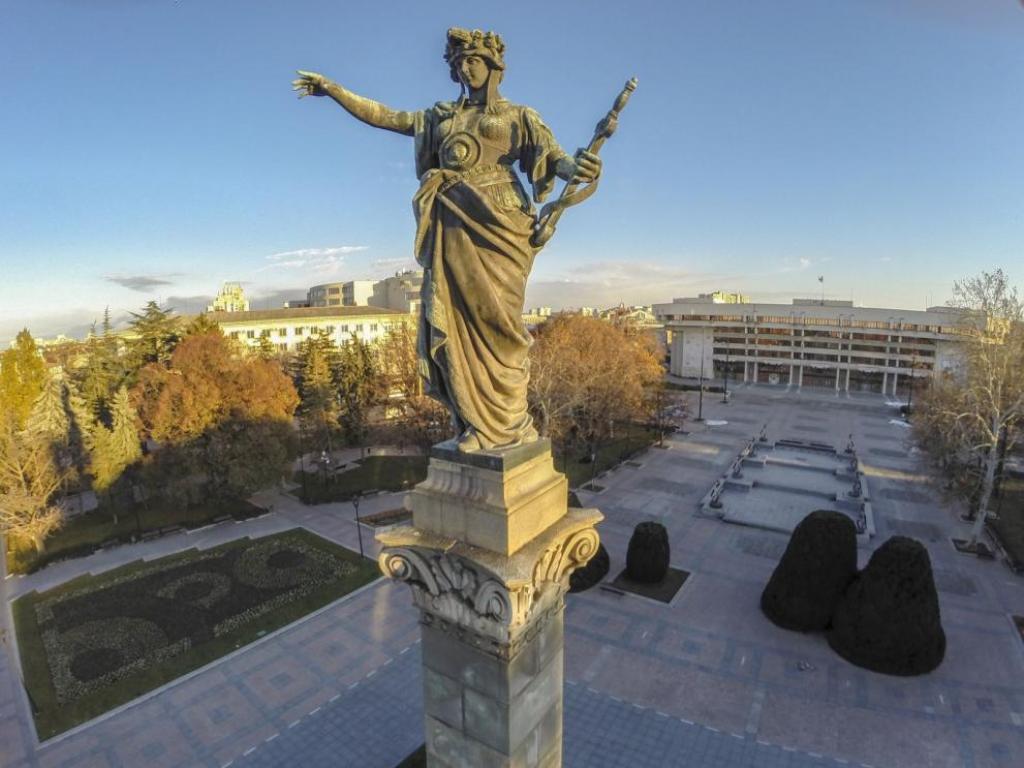
The Monument of Freedom in Ruse is the absolute symbol of the city and one of the most beautiful monuments in the entire country. It consists of a monumental pyramid-shaped base with a pedestal, a column, and a statue. At the base of the monument there are three bas-reliefs depicting scenes from the struggles for national liberation, as well as two lion statues—one tearing apart chains with its jaws and the other defending a shield and sword, symbolizing freedom. At the top of the tall column stands a bronze statue of a woman, also a symbol of freedom, holding a sword in one hand and pointing north with the other—the direction from which the Russian liberating forces arrived.
The project was entrusted to the renowned Italian sculptor Arnoldo Zocchi, who created remarkable monuments across Italy, the United States, and even Argentina. In Bulgaria, he is known for the Monument to the Tsar Liberator in Sofia and the Demeter Fountain in Plovdiv. Granite for this monument was imported from Austria.
The monument was completed in 1908 but officially inaugurated in 1909. For the ceremony, Bulgarians from across the country gathered in Ruse—many of them veterans of the April Uprising and the Russo-Turkish War. From then until today, this monument remains a living part of the city’s history, a vivid symbol of the striving for freedom, and a beloved meeting place for the people of Ruse.
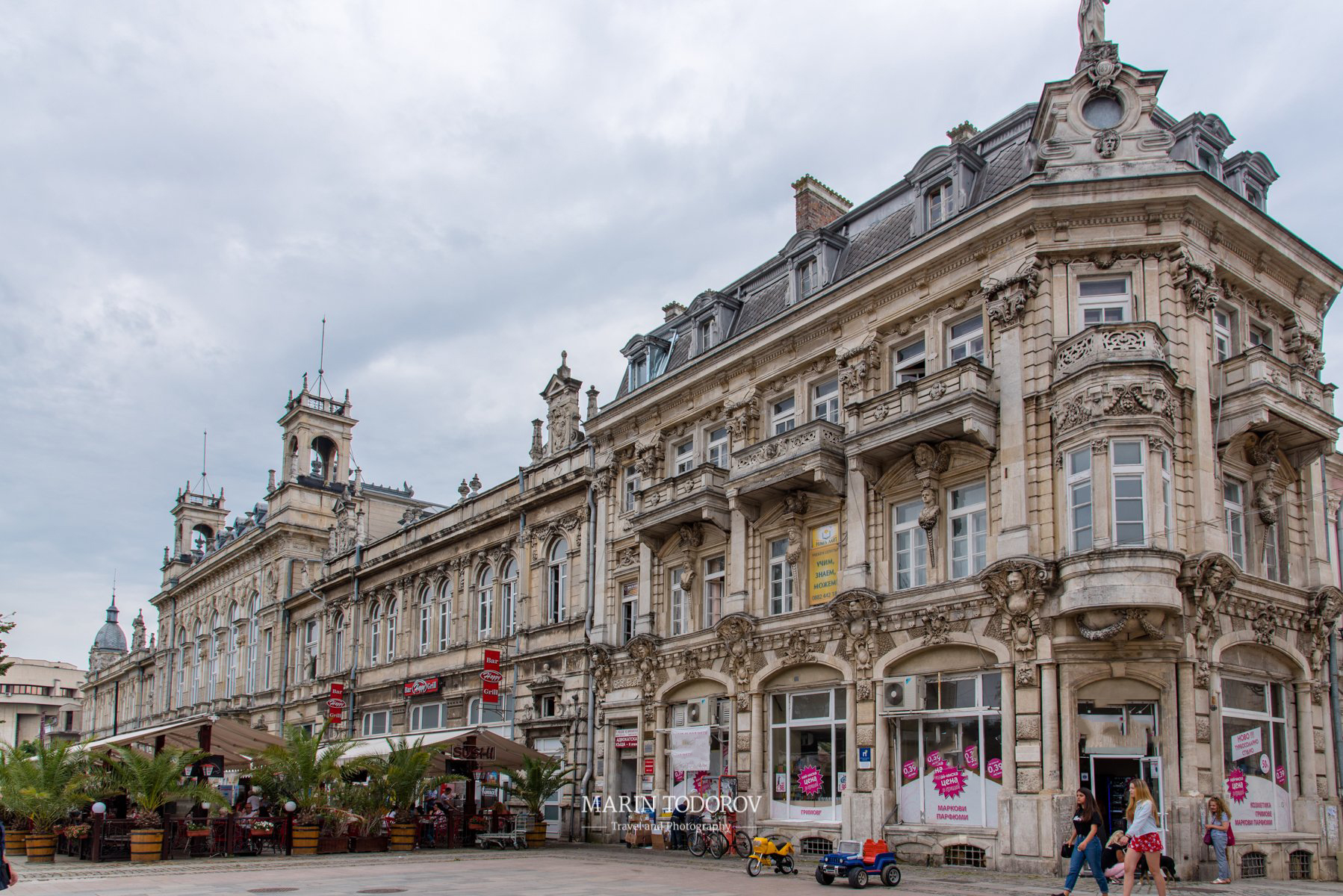
The Dohodno Zdanie is a building with a mission, a building of unity and spirit. It is a valuable architectural masterpiece designed by the Viennese architect Peter Paul Brang, whose work brings a distinctive European atmosphere to Ruse. It was built between 1898 and 1902 in the central part of the city.
Its name comes from the idea that the building would generate income for the local school board from renting the planned shops, the theatre hall, the library, and the casino. Constructed in the Neo-Baroque style, the building’s façade features colonnades, pilasters, and rich decorative elements. The façade is highly ornate, with elaborately decorated windows, curved balconies, and cornices—symmetrical and impressive in appearance.
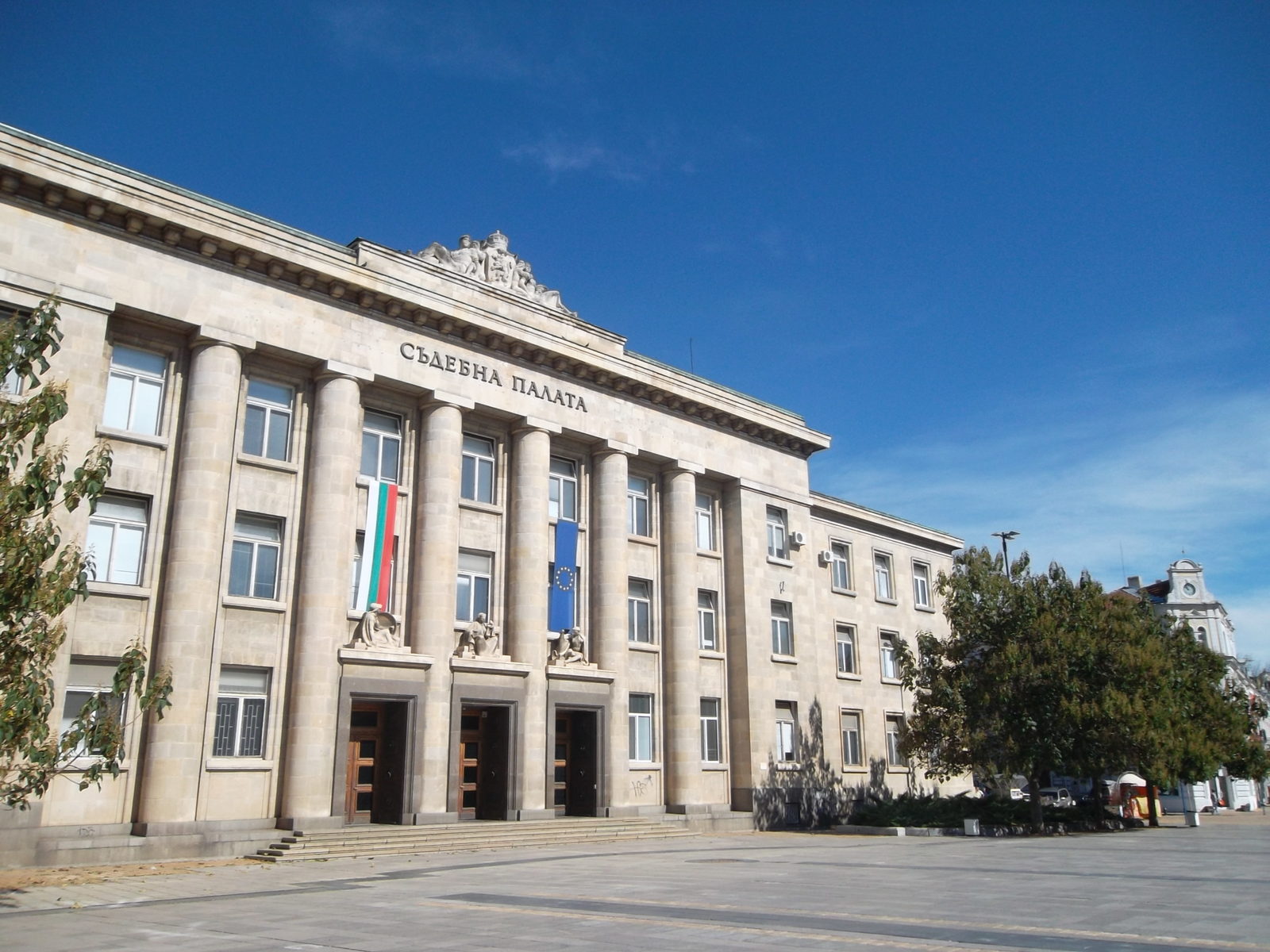
Immediately after the Russian army crossed the Danube in 1878, the establishment of the state administration of Bulgaria began. These functions were assigned to the civil governance formed under the command of the Russian military forces, whose primary task was to replace the Ottoman administration with a new governing structure.
After the Liberation, the territory of the Principality of Bulgaria was divided into five provinces: Sofia, Vidin, Tarnovo, Ruse, and Varna. The judicial system functioned according to the Temporary Rules for the Organization of the Judicial Authority in Bulgaria.
According to the Temporary Rules of 24 August 1878, District Courts were created in each administrative district. They handled all civil, commercial, and criminal cases as courts of first instance. In major commercial centres, Commercial Courts were to be established—of which only one was created, in Ruse. Provincial Courts served as appellate courts for cases submitted from District and Commercial Courts.
Today, the Ruse District Court acts as a first-instance court for civil, criminal, and commercial cases and serves as an appellate court for cases coming from the regional courts within its district. It is led by a chairperson and a deputy chairperson, and the judges are organized into civil, commercial, and criminal divisions.
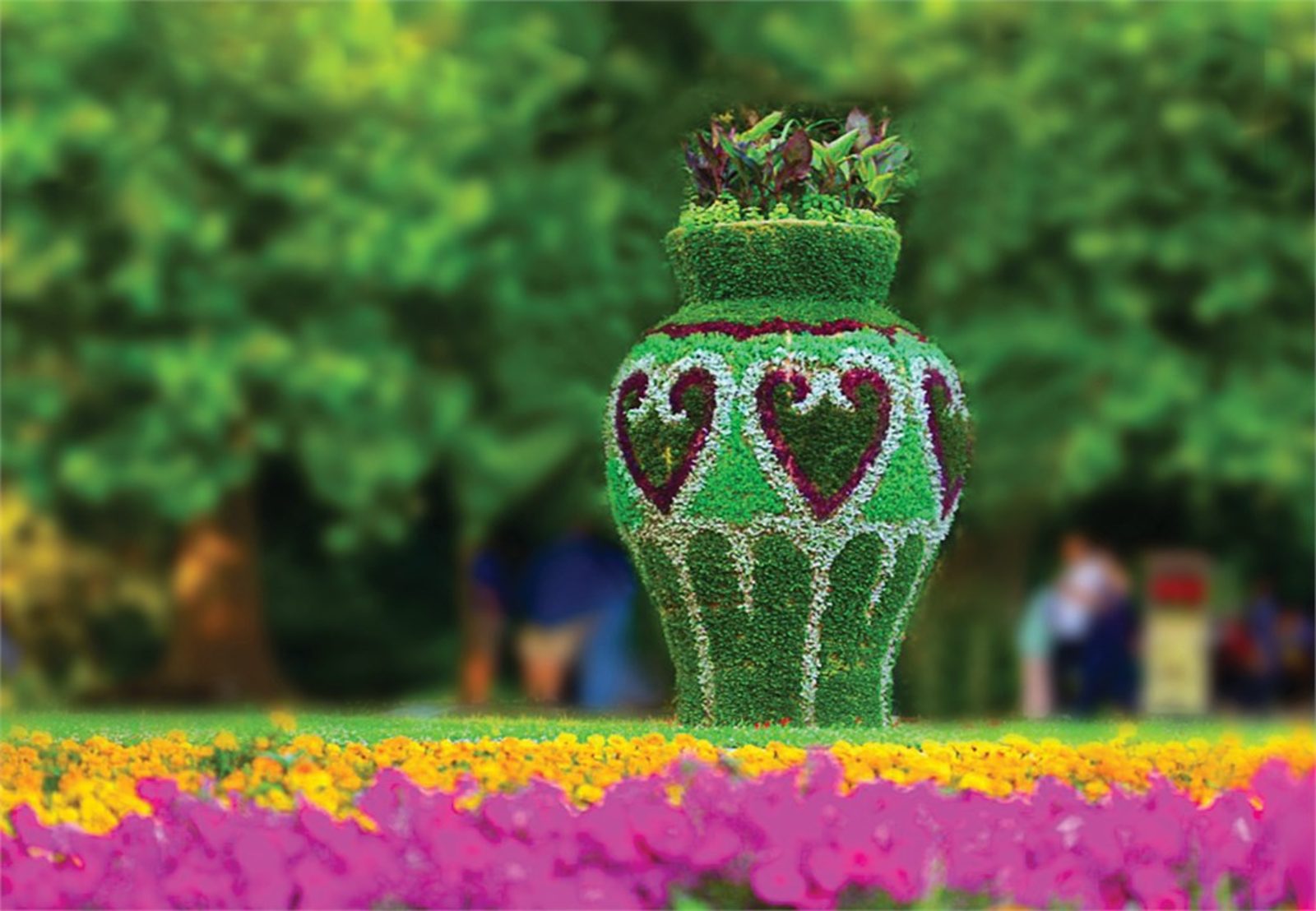
The Vase was created in the mid-1950s. It stands 3.40 meters tall, with a circumference of 7 meters at its widest point. This floral attraction has its own built-in irrigation system. Each year, its appearance features new and beautifully arranged floral designs.
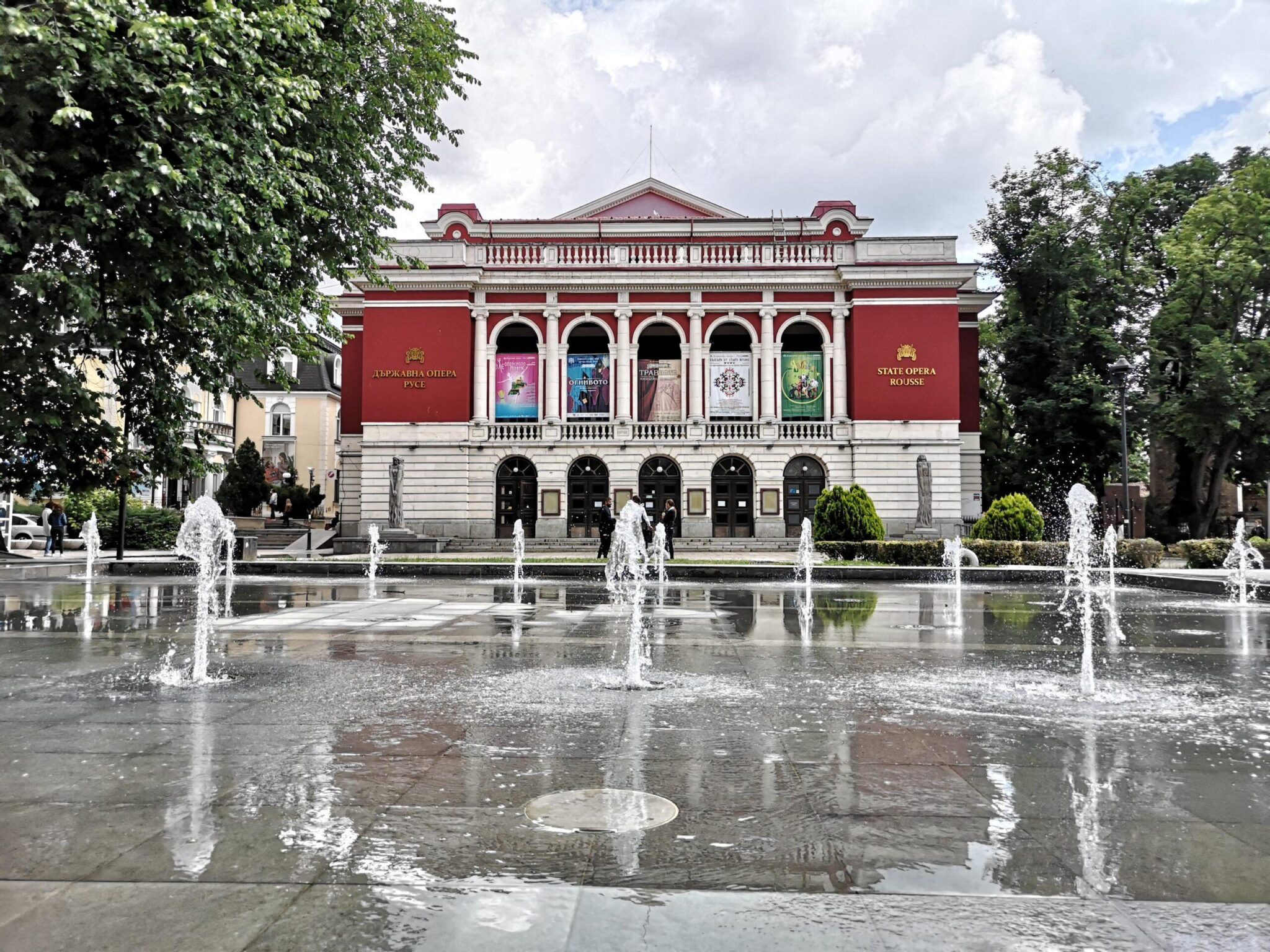
The Ruse State Opera has a tradition spanning over a century, with its first performances dating back to the late 19th century. From a small amateur troupe, it developed into a respected state cultural institution that continues to inspire audiences with a rich repertoire of major Bulgarian and international productions.
The earliest organized structure performing opera music was the Lira Music Society, founded in 1891 by Atanas Paunov and Trifon T. Trifonov. Thanks to their work, Ruse audiences saw productions of Tannhäuser (1901), Ernani (1904), Faust (1910), and many more operas and operettas that sparked lasting interest among locals. Due to the growing popularity of the opera genre, the Opera Fellowship was established in 1919—the institution that, through several transformations, became today’s Ruse State Opera.
Over the years, the opera has attracted world-renowned performers such as Hristo Brambarov, Todor Mazarov, Nikolay Gyaurov, Nikola Gyuzelev, Raina Kabaivanska, Ghena Dimitrova, Anna Tomowa-Sintow, Alexandrina Milcheva, Darina Takova, Kaludi Kaludov, and many international stars.
The Ruse Opera has recordings preserved in the Golden Archives of the Bulgarian National Radio and Bulgarian National Television. It has participated in international festivals across Europe and has toured with great success in Romania, Greece, Ukraine, Spain, the Netherlands, Belgium, Luxembourg, Austria, Germany, France, and Portugal.
In 1999, the Ruse National Opera merged with the Ruse State Philharmonic to form the Opera and Philharmonic Society – Ruse, renamed in 2010 to Ruse State Opera.
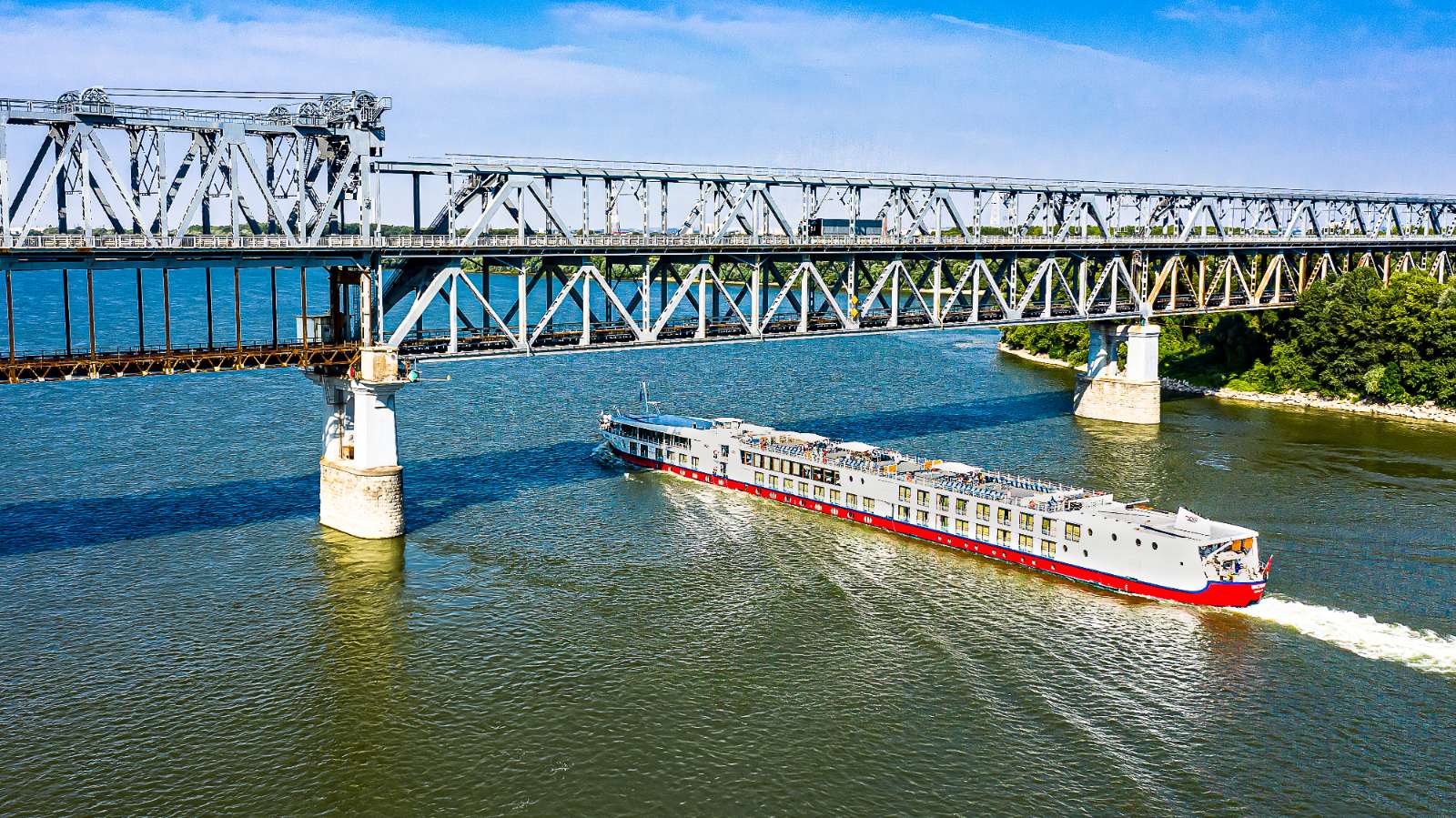
The Danube Bridge in Ruse is an important architectural structure connecting the city with Romania. It plays a major role not only in transportation but also in the economic and cultural relations between the two sides of the Danube. The bridge was built in just two years and seven months—seven months ahead of schedule—thanks to the use of advanced construction methods and extensive mechanization. It consists of steel structures and concrete elements.
The bridge is designed for vehicle traffic and also includes pedestrian and bicycle lanes. Its contemporary engineering style focuses on functionality and durability. It is approximately 2 kilometers long, with a width allowing for comfortable two-way traffic.
The Danube Bridge facilitates trade, cultural exchange, and mobility between Ruse and Giurgiu, strengthening ties between the two cities.
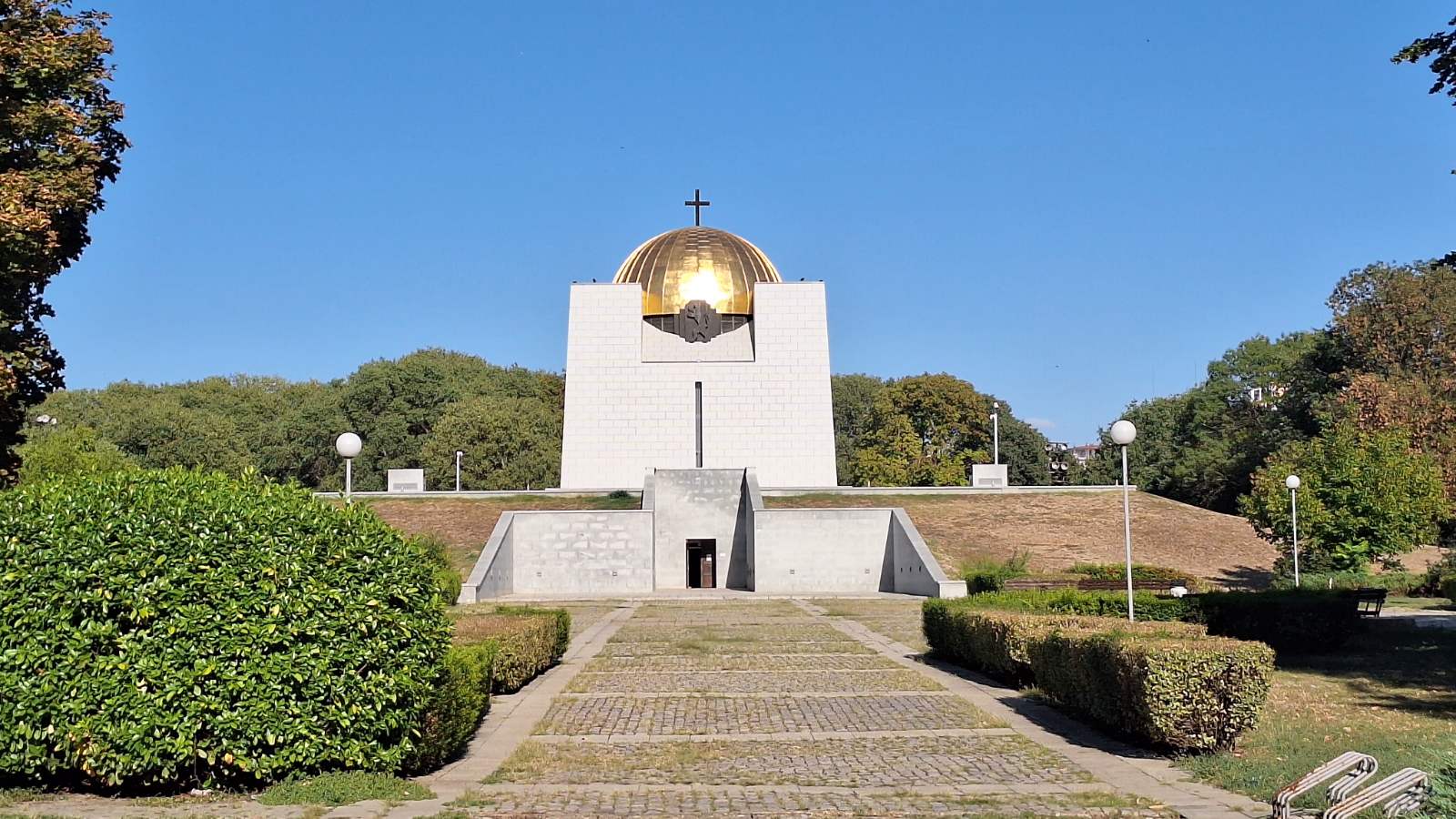
Located in the old cemetery of Ruse, in the Park of the National Revivalists, the Pantheon was built in honour of the Bulgarians who gave their lives for the country’s freedom. It is an ossuary-monument containing the remains of 453 revolutionaries and volunteers from the Russo-Turkish War (1877–1878), members of revolutionary bands, and cultural and educational figures.
Among those buried here are Lyuben Karavelov, Zahari Stoyanov, Toma Kurdzhiev, Atanas Uzunov, and Olimpi Panov—key figures in the struggle against Ottoman rule. The Pantheon also houses the remains of Ruse’s first teachers—Daskal Dragni, Daskal Toni, Nil Izvorov, Tsani Gintchev, and Dragan Tsankov.
Members of the Chervenovo Band, who participated in the Serbo-Turkish War of 1876, are also commemorated here, as well as Baba Tonka and the Obretenovi family—important revolutionaries closely associated with Ruse.
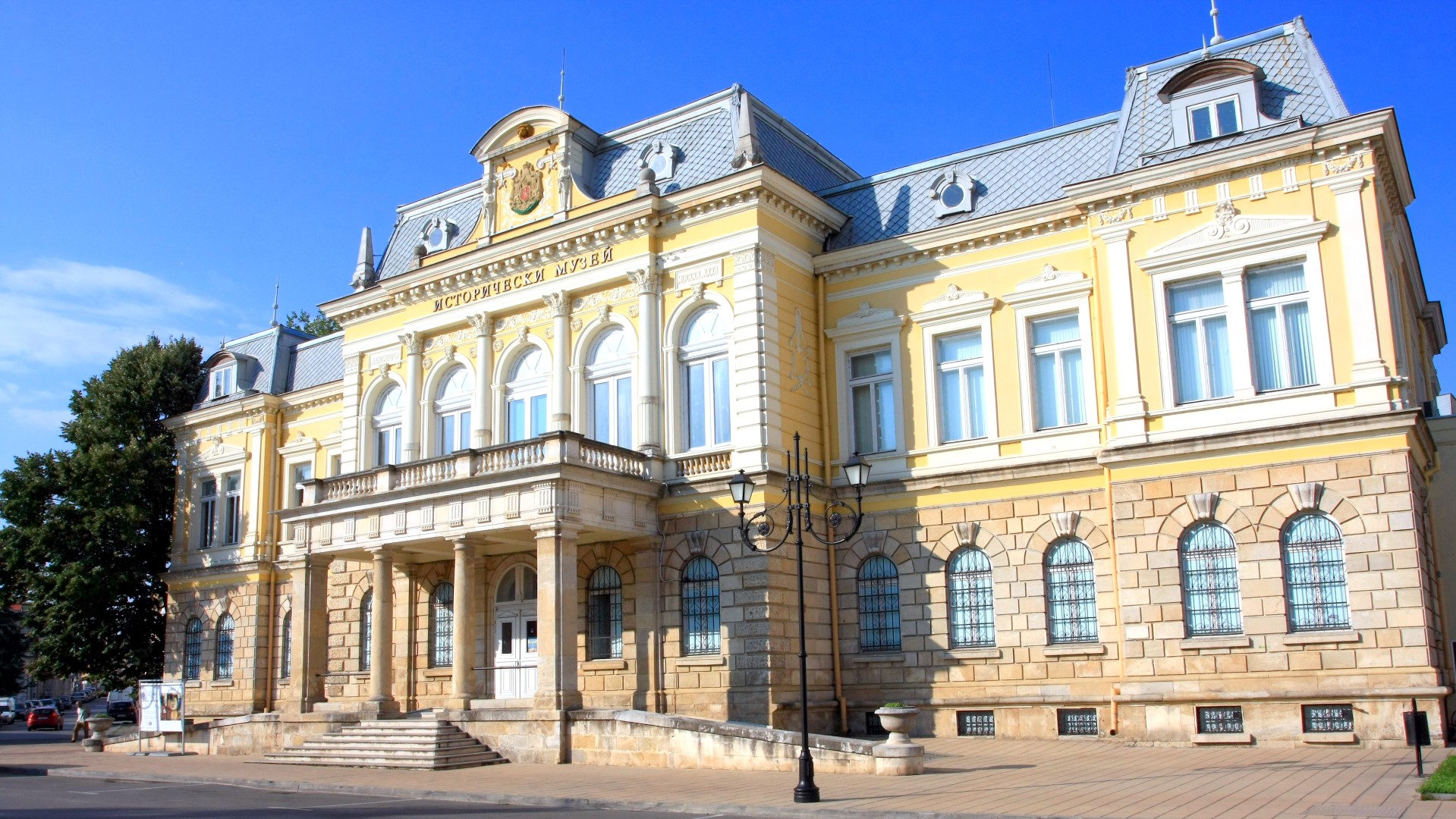
The Regional Historical Museum of Ruse preserves rich ancient heritage. The permanent archaeological exhibition spans five halls. The Roman period is represented by bronze and stone figurines, votive tablets, everyday objects of Roman and barbarian populations in Lower/Second Moesia. Exhibits highlight pagan cults, early Christian life, weapons, including a unique late Roman cavalry helmet, the gold treasure of Malak Preslavets, jewelry, glass vessels from necropolises at Sexaginta Prista and Tegra (near the town of Marten), and numerous rare gold and silver coins.
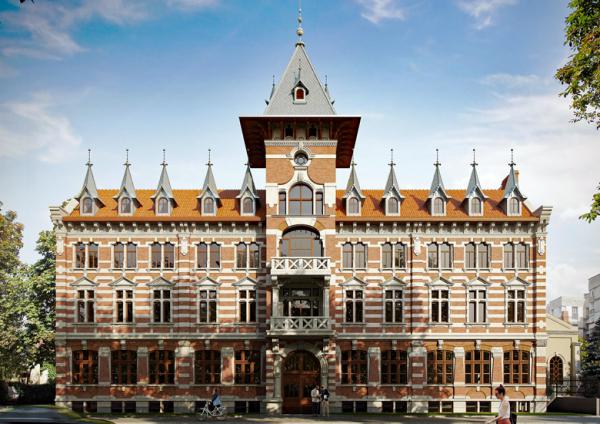
The Ruse Numismatic Museum (RNM) is a private museum in Bulgaria, focused primarily on numismatics. Its future home is the historic building of the former Music School, a cultural monument from 1901 designed by architect Udo Ribau.
The museum aims to operate as a European research center for numismatics, offering educational programs, exhibitions, scientific activities, and art displays. The restoration project includes storage areas, permanent and temporary exhibition halls, an educational children’s center, a virtual museum, a reading zone, and a fully restored concert hall for cultural events and conferences.
RNM is one of the most mobile museums in Bulgaria, presenting its collections through innovative mobile display cases and custom-built software. To date, it has organized 38 traveling exhibitions showcasing the numismatic collections of the “Bobokov Brothers” Foundation, representing nearly complete series of ancient coinage from Thrace, Moesia, and Dobrudzha—providing invaluable historical data not available from archaeological or literary sources.
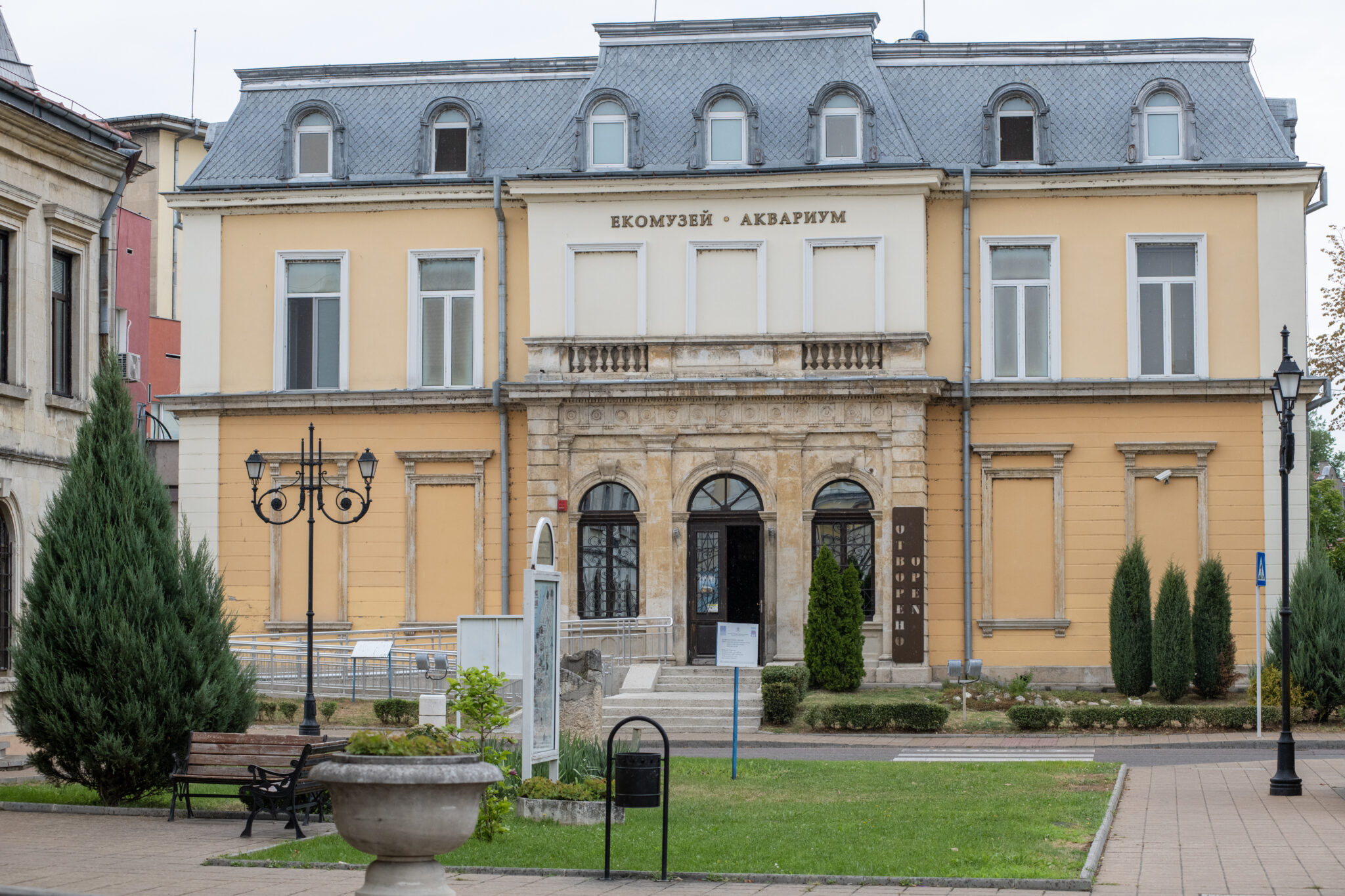
The Ecomuseum presents the biodiversity of the Rusenski Lom Nature Park and the Ruse region—from prehistoric mammals to modern-day species. It also highlights the local protected areas and plant life. Spread across four floors (2,400 sq. m), the Ecomuseum differs from traditional natural history museums by focusing on the relationships between plants, animals, and humans.
On the first floor is a collection of million-year-old fossils, including giant mammoth bones. In Bulgaria, remains of four mammoth species have been found; the Ruse Museum houses the best collection in the country and the only fully preserved lower jaw of the most primitive mammoth, Mammuthus romanus, which lived 3 million years ago.
Visitors can see a life-sized mammoth model—a favorite attraction for children.
Numerous dioramas recreate animal habitats. Among the taxidermy exhibits are a two-headed calf, a giant rooster with dinosaur-like scales on its legs, a three-meter-long beluga, a giant tortoise, and more. There is also a 15-meter replica cave, divided into two parts—one depicting the UNESCO-listed Ivanovo Rock Churches and the other representing the Orlova Chuka Cave with bats, sounds, and stalactites.
In the basement, a small aquarium displays the diversity of Danube fish—sturgeons, carp, grass carp, silver carp, pike, catfish, and more—arranged so that bottom-dwelling and surface fish coexist in the same tank.
The museum also features films on biodiversity, wetlands, bats, and deer, as well as interactive games for children, and exhibits of artifacts from the early 20th century to the present, along with items representing Ruse’s many historical “firsts.”
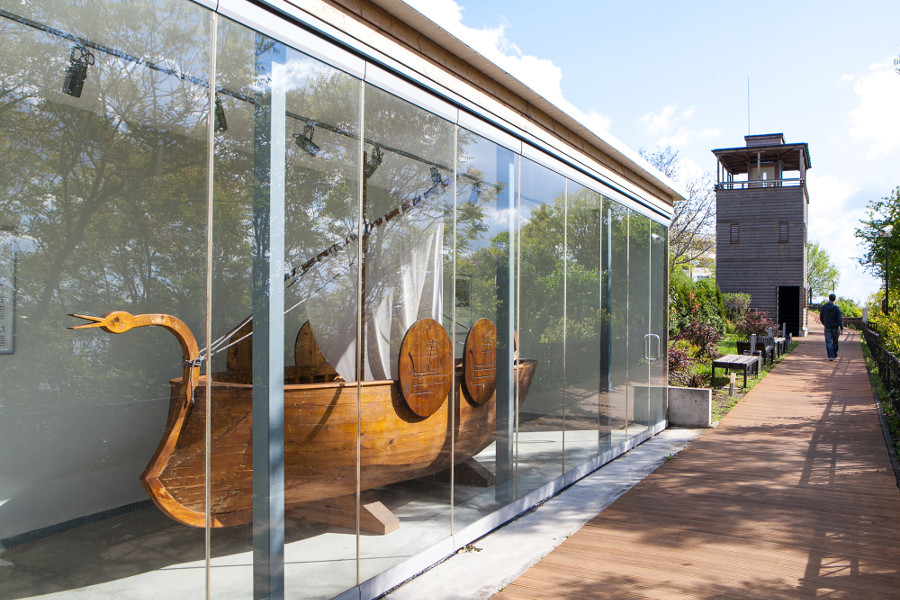
Sexsaginta Prista is located in the modern northwestern part of the city of Ruse, on an elevation near the bank of the Danube River. The first Roman military camp (from the late 1st to the late 3rd century AD) was likely situated at the mouth of the Rusenski Lom River. The fortress of Sexsaginta Prista covers an area of 4–5 hectares. The remains on the hill (2nd–3rd century AD) belong to civilian structures, probably part of a settlement near the military camp, which also functioned as a cult center.
One of these structures is a temple dedicated to Apollo, built during the last quarter of the 2nd century AD (during the reign of Commodus or more likely at the beginning of the Severan dynasty). The plan of the temple is particularly interesting—its orientation from northeast to southwest resembles that of a Christian basilica. Findings recovered here include four complete and fragmentary votive tablets dedicated to the Thracian Horseman and Apollo, ceramic vessels, coins, a sacrificial altar to Apollo with an inscription, and other artifacts.
The building ceased to function at the end of the 3rd century. In the 4th century, during the reign of Emperor Constantine the Great, one of the most important structures of the Roman military camp was erected on top of it—the Principia (the headquarters of the military unit stationed at Sexsaginta Prista). The building has a rectangular layout, oriented northwest–northeast along its longer sides. It was constructed of unworked stones bonded with mortar and measures 28.50 by 16.50 meters. It stopped functioning as the Principia during the disturbances caused by the Goths at the end of the 4th century. After that, like the rest of the camp’s territory, it continued to be inhabited during Late Antiquity (5th–6th century) and during the First Bulgarian Empire (10th–11th century).
Today, the fortress of Sexsaginta Prista is arranged as an open-air museum, displaying conserved and restored remains including about 50 meters of the northwestern fortress wall and tower, six buildings, the temple of Apollo, and the Principia. The exhibition also features a German bunker from World War II, where the religious life in the province of Lower Moesia during the 1st–3rd centuries is presented through votive materials.
The museum also has an indoor exhibition hall, currently showcasing scaled paper 3D models of archaeological sites along the Danube Roman Limes and replicas of the most representative artifacts discovered at these sites.
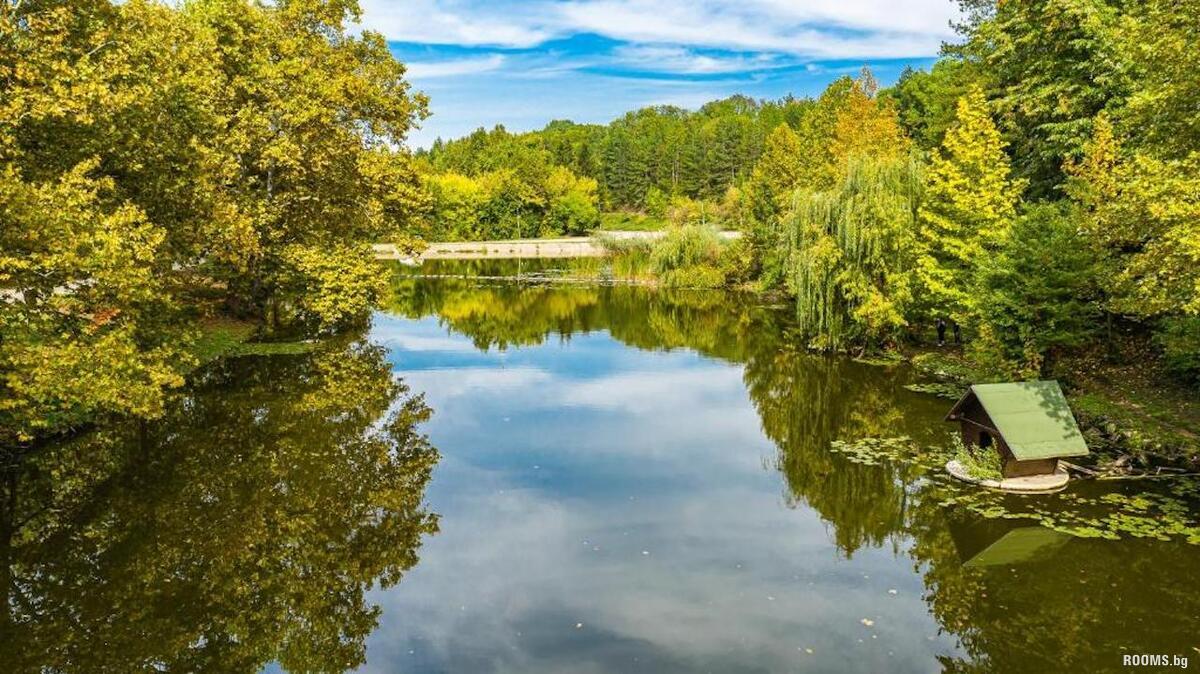
Lipnik Forest Park, known locally as Teketo, is part of a vast forest area of linden trees, covering an impressive 20,000 decares, from which the area takes its name. It is considered the largest forest park in Bulgaria. Teketo is located about 10 km from the city of Ruse, near the village of Nikolovo.
The park’s development began in the mid-20th century. Within its territory lies an artificial lake—home to water lilies—and a small zoo, which, although not in the best condition, still shelters goats, a bear, and several bird species. The variety of flora is rich, making it an appealing destination for plant enthusiasts. Several pathways lead to different parts of the park and are suitable for cycling.
The large lake is a popular spot for rowing competitions, at least once a year hosting an official regatta. It is also stocked with fish and attracts many anglers. Visitors can enjoy boat or pedal boat rides. Guest houses, villas, and even the former residence of Todor Zhivkov are located around the park.
In the area around Nikolovo, you can also find five protected centuries-old oak trees, estimated to be between 150 and 300 years old.
In ancient times, near the former Alevi tekke, there stood an old Bulgarian monastery—St. Elijah. After its destruction, a healing spring (ayazmo) appeared at the site. According to tradition, the tekke was later built there, only to be destroyed during the early 19th-century wars with Russia. A sculpture of Diana—the Roman goddess of the hunt—was later erected near the spring. Locals call it “the white girl.”
Visitors often toss coins into the small pool fed by the spring waters, symbolizing wishes for health and love.
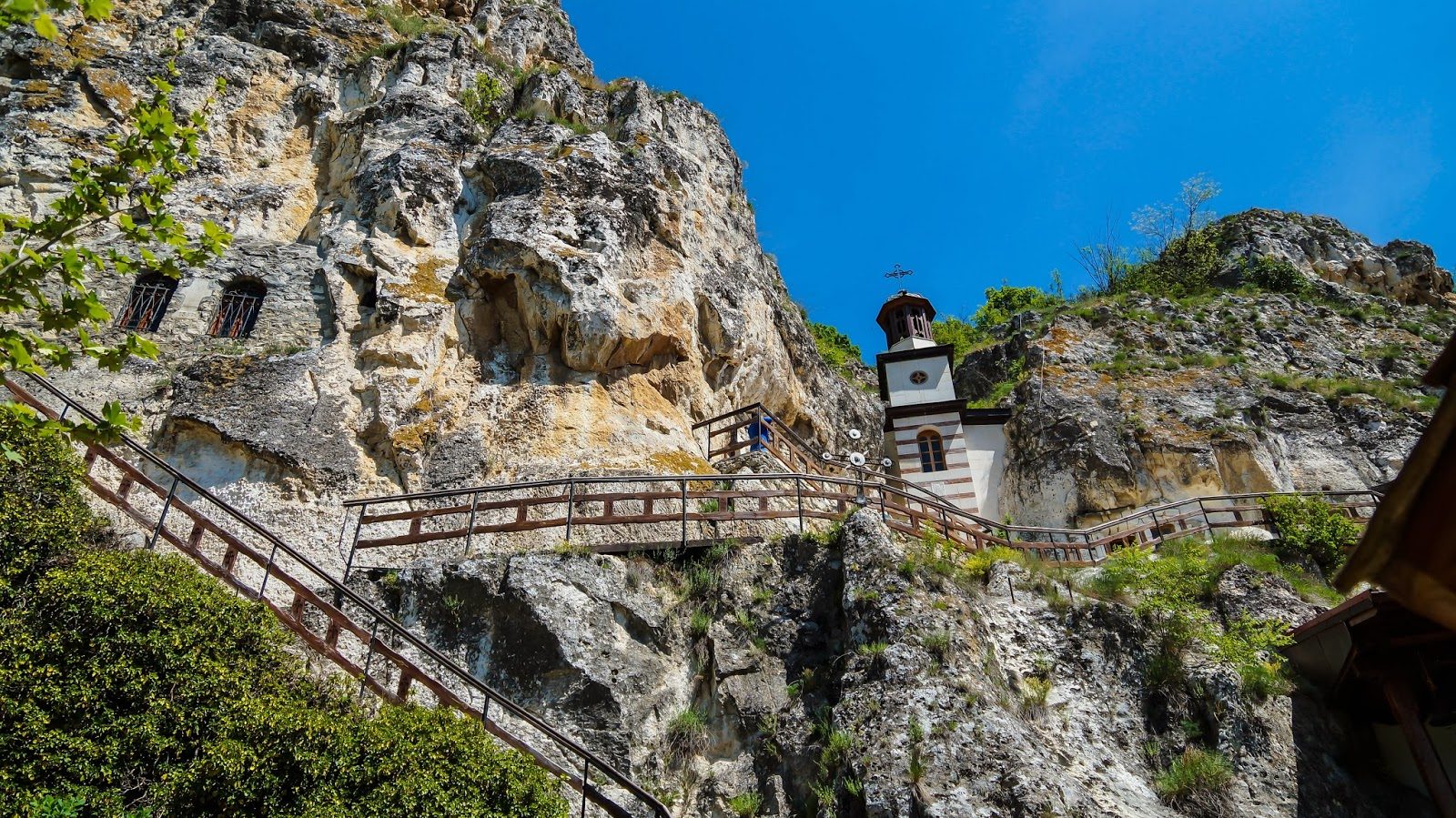
The Basarbovo Monastery of St. Dimitar Basarbovski is the only functioning rock monastery in Bulgaria. It lies in the valley of the Rusenski Lom River near the village of Basarbovo, about 10 km south of Ruse. The monastery was founded during the Second Bulgarian Empire (12th–13th century). Several rock monasteries were created in this region during the same period, carved into the limestone cliffs by hesychast monks.
The monastery gained fame in the 17th century, following the death of St. Dimitar Basarbovski (the New). Several legends surround him. One tells of a blind girl who had a dream in which the saint revealed that his body lay in the river. When the relics were found, they were miraculously preserved and fragrant, and the girl regained her sight.
Another legend tells how the ruler of Wallachia demanded the saint’s relics to be brought to him. However, the cart carrying them refused to move beyond a certain point, despite the changing of horses. The relics were returned to Basarbovo.
A third legend says that in 1774 the relics were being transported to Russia. At that time, Bucharest was suffering from a plague epidemic. As the relics passed through the city, people stopped dying, and the locals begged the Russian authorities to leave them there. Today, the relics remain in Bucharest, housed in the Patriarchal Cathedral of Saints Constantine and Helena.
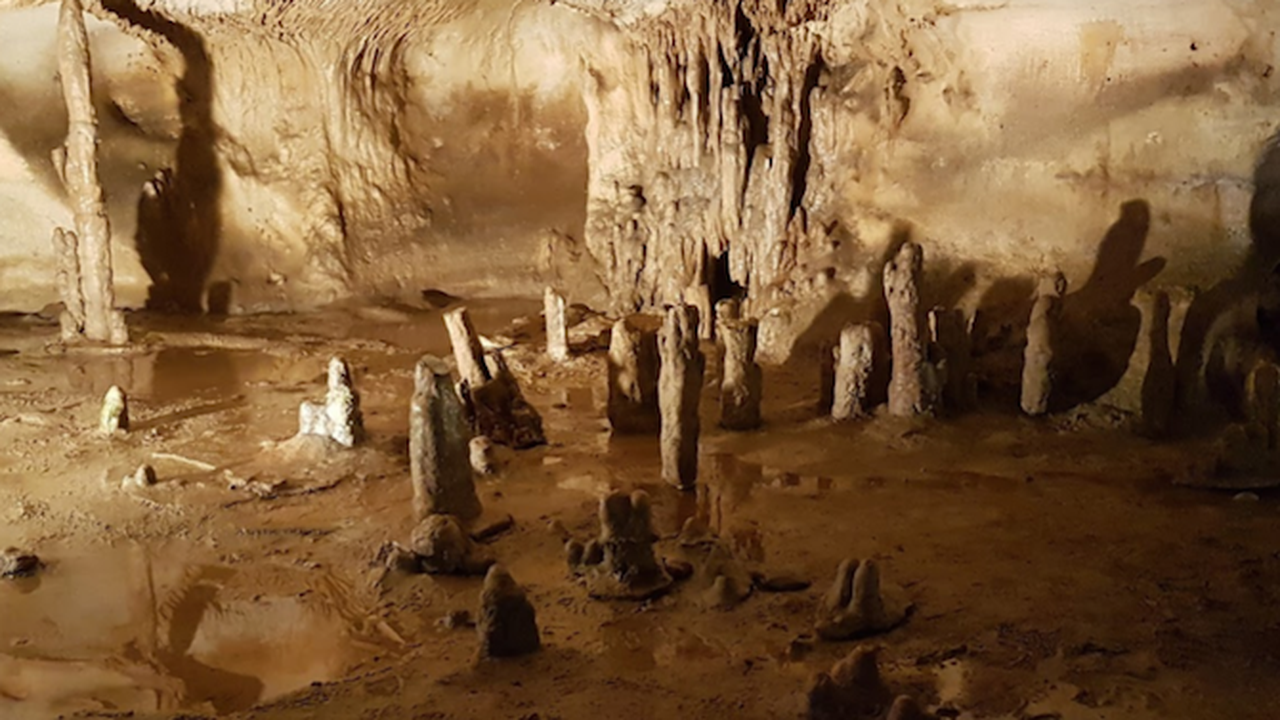
Orlova Chuka Cave is located 9 km past the town of Dve Mogili, in the canyon of the Cherni Lom River. From Ruse, the distance is about 38 km, accessible by car. The cave was discovered in 1941, and prehistoric human remains have been found during research.
The cave is carved into limestone rock and has a total gallery length of about 14 km, making it the second-longest cave in Bulgaria after Duhlata near Vitosha Mountain. Its name derives from the rocky ridge above the entrance, which was once home to nesting eagles; “chuka” means a rocky height.
A steep staircase of stone steps leads to the entrance. Inside, visitors can see beautiful galleries and typical cave formations. The temperature is constant throughout the year—around 14°C.
A complete tourist tour takes about 35–40 minutes, with groups entering every full hour. Tickets are 6 BGN for adults and 3 BGN with a discount. Nearby is a mountain hut where visitors can rest or have a meal.
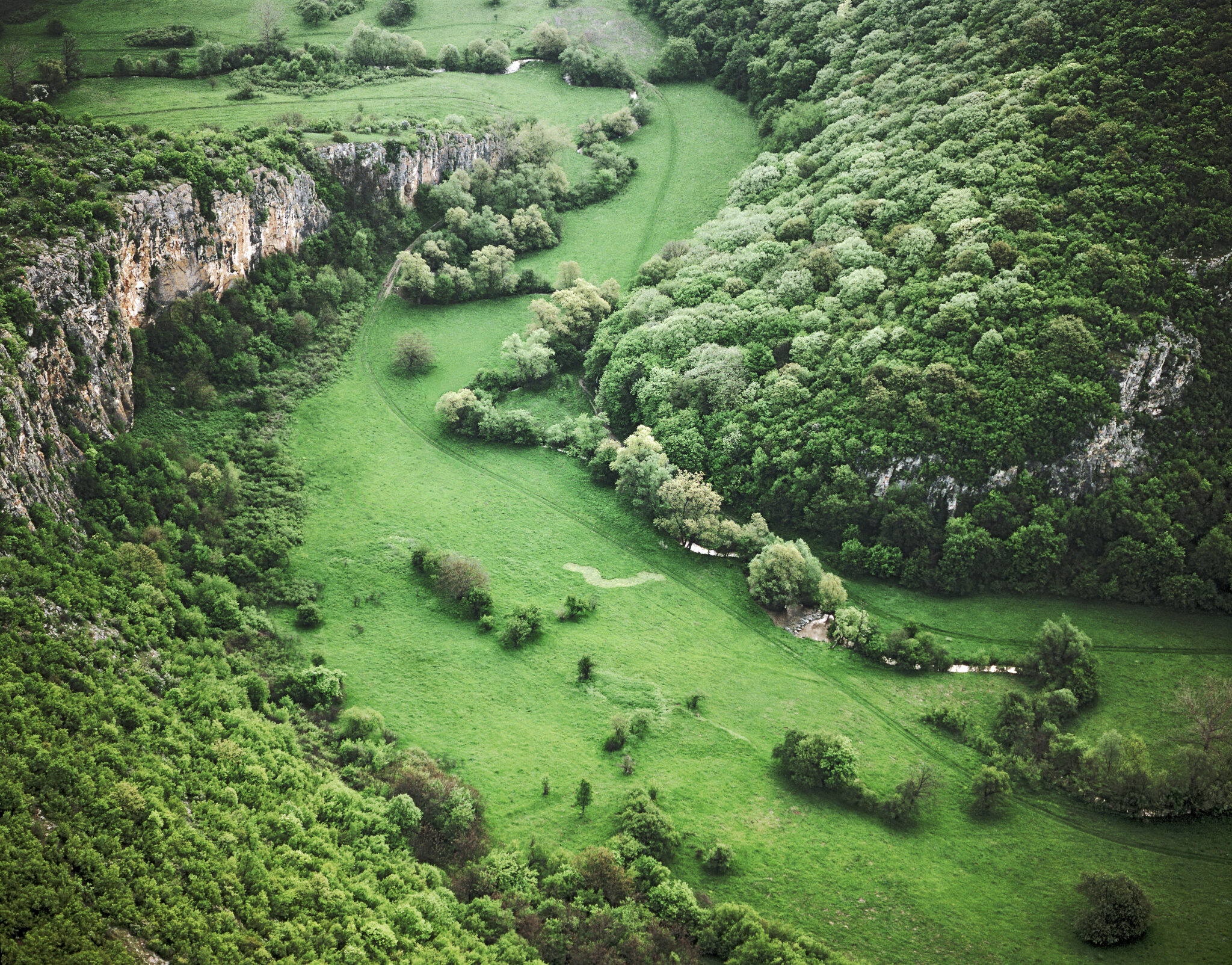
The picturesque canyon valley of the Rusenski Lom River enchants with scenic views, numerous meanders, rich nature, and majestic limestone cliffs dotted with churches and monastic cells. The area is part of the Danubian Plain and is known as Polomieto or the Loms. Because of its karst terrain and dramatic cliffs, it is also called the Lower Land or the Mountain beneath the Plain.
Rusenski Lom Nature Park lies 20 km south of Ruse and is named after the last right tributary of the Danube—the Rusenski Lom River. Established in 1970 as a protected area, the park spans 3,408 hectares.
Its river terraces, high cliffs, caves, rock formations, biodiversity, and historic sites make it a remarkable place to visit. It offers excellent opportunities for eco and adventure tourism, as well as scientific research. The park contains 902 plant species and a wide variety of wildlife—including 66 species of mammals and 190 species of birds, 110 of which nest within the park.
All routes are well marked and do not require a guide if followed correctly.
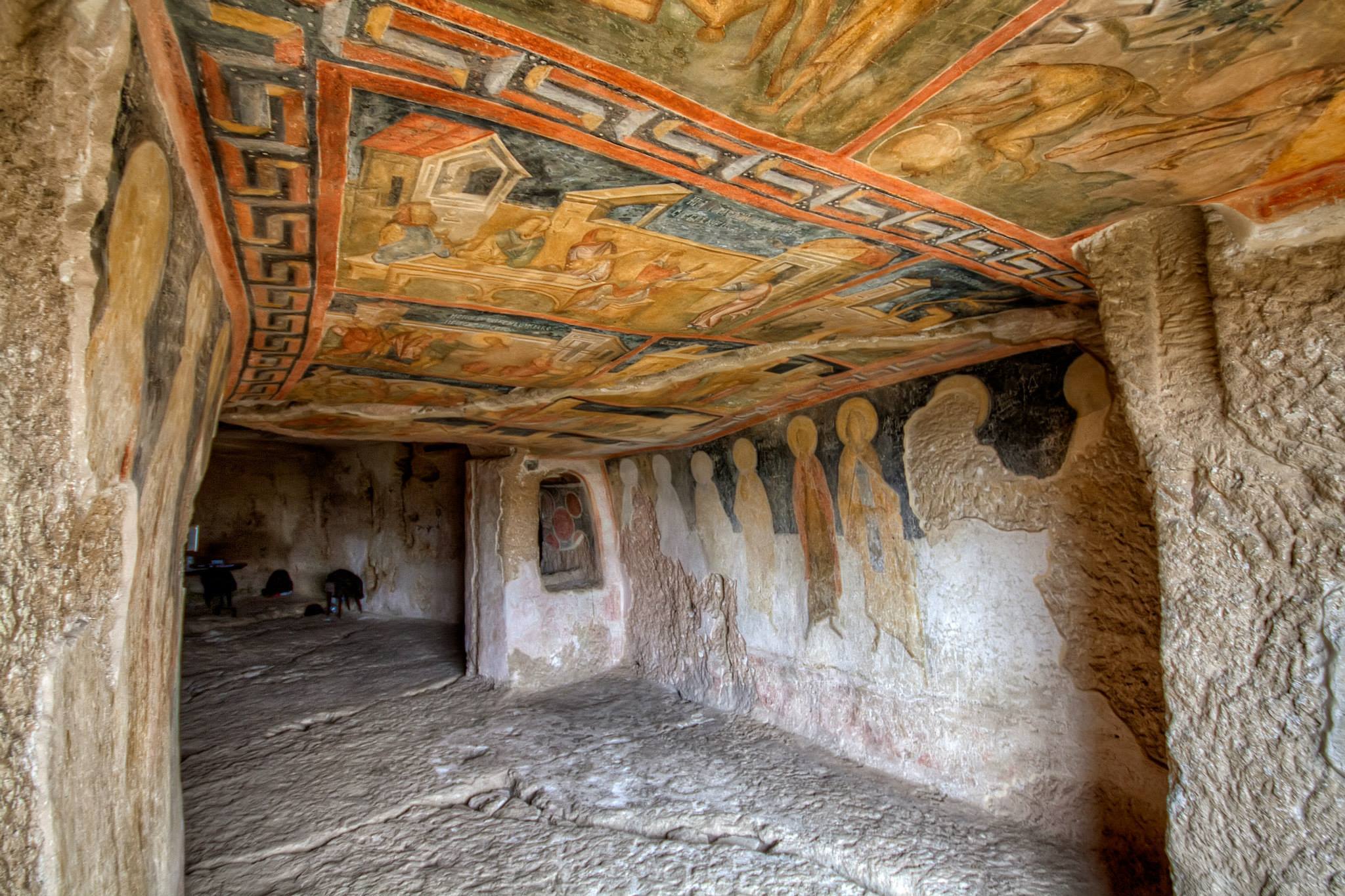
The Ivanovo Rock Churches are a UNESCO World Heritage Site—a complex of churches, chapels, monastic dwellings, and hermitages carved into the cliffs of the Rusenski Lom canyon. Located 4 km northeast of the village of Ivanovo, they originated in the 11th century and flourished during the Second Bulgarian Empire.
The monastery of St. Archangel Michael, founded in the 1220s by the monk Joachim (later Bulgarian Patriarch), is the most significant site. The finest frescoes can be seen in the church of St. Mary.
Tickets cost 5 BGN, with an optional guided tour for 10 BGN. From November to March, visits are only possible with prior booking.
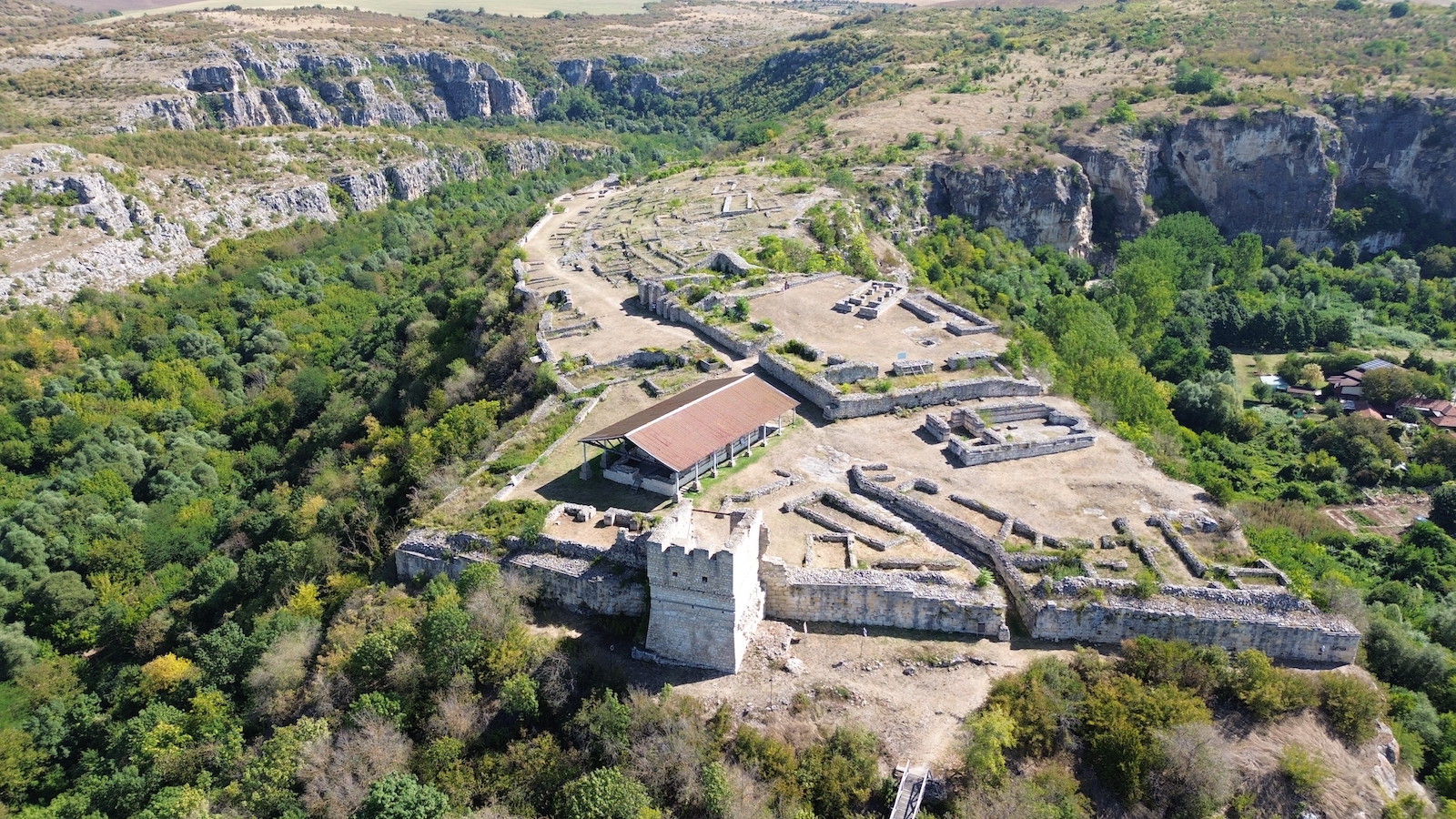
Located within Rusenski Lom Nature Park, 35 km from Ruse, near the village of Cherven, this medieval town was one of the most important military, administrative, religious, and economic centers of the Second Bulgarian Empire (12th–15th century). It was built atop a high rocky plateau overlooking the Cherni Lom River.
The settlement featured a large citadel, fortress walls, an outer town, underground water passages, administrative buildings, churches, houses, and workshops. Archaeological excavations have uncovered jewelry, coins, ceramics, tools, and many everyday objects.
In 1235, Cherven became the seat of the Cherven Metropolitan Diocese. A notable discovery is the gravestone of Hungarian princess Ana-Maria, wife of Tsar Ivan Asen II, who died in 1237.
The site was attacked and destroyed by the Ottomans in 1388, later experiencing a revival in the 17th century. Today it is a national archaeological reserve.
Visitors can explore 13 church foundations, the boyar’s palace, and one of only two preserved medieval defense towers in Bulgaria. Guided tours by the Ruse Regional Museum of History are available on-site.
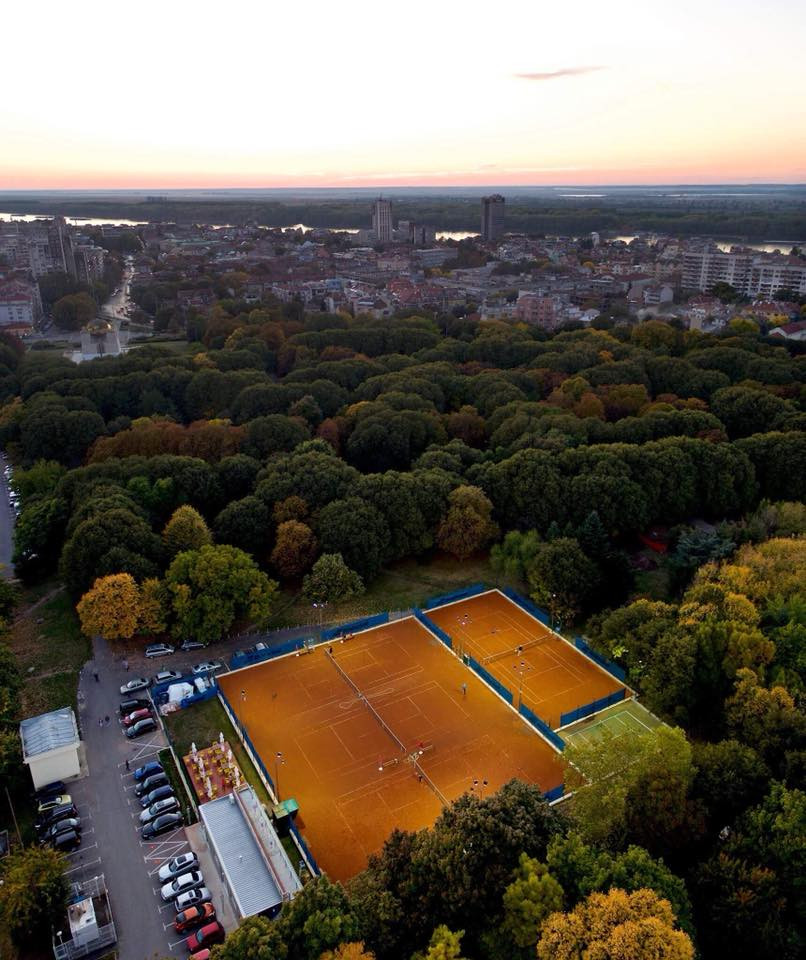
Ruse and the nearby area offer a wide variety of sports: fitness, tennis, volleyball, basketball, Zumba, dance classes, callanetics, martial arts, table tennis, gymnastics, badminton, football, shooting sports, horseback riding, rowing, rock climbing, and more.
For guests seeking relaxation and new experiences, we can also arrange entertainment such as wine tourism, fishing, karting, and other activities.